

OKX Reports Trading Surge After US and EU Expansion
- OKX says trading activity in regulated markets jumped 53× in 2025
- Expansion into the US and EU cited as main growth drivers
- Daily active wallets doubled year over year
- Around 190,000 new wallets created per day on average
- DEX trading volume rose 262% globally
- Centralized exchange trading increased 16%
- Regulatory licensing under MiCA and US policy shifts played a key role
Crypto exchange OKX reported a sharp increase in trading activity across its licensed and regulated platforms in 2025, attributing the surge to its expansion into the United States and the European Economic Area.
According to internal data shared by the exchange, trading volume in regulated markets grew 53-fold over the past year. The company also said daily active wallets doubled during the same period, with an average of roughly 190,000 new wallets being created each day.
OKX also reported strong growth across both decentralized and centralized trading venues. Global decentralized exchange (DEX) volume on OKX rose 262%, while centralized exchange trading increased by 16% year over year.
Regulatory-First Strategy Drives Growth
OKX credited its performance to an operating model centered on compliance and licensed market access.
In Europe, the exchange expanded across the European Economic Area in January after securing authorization under the EU’s Markets in Crypto-Assets (MiCA) framework. MiCA introduced a single licensing regime that allows crypto service providers to passport services across all EU member states.
In the United States, OKX entered the market in April. The exchange said the launch aligned with several favorable regulatory developments, including the passage of the GENIUS Act, which established a federal framework for stablecoin payments, and actions by the Office of the Comptroller of the Currency to charter crypto-native trust banks.
Global Exchange Rankings and Market Presence
Data from CoinMarketCap currently ranks OKX as the fourth-largest cryptocurrency exchange globally. The rankings take into account factors such as platform traffic, liquidity, reported trading volume and confidence in the authenticity of those volumes.
Despite its global expansion, OKX also faced regulatory challenges in certain jurisdictions. In December, the exchange was among several platforms blocked in Belarus after the country’s Ministry of Information restricted access to their websites, citing violations related to advertising rules under the Law on Mass Media.
Europe’s Licensing Race Intensifies
OKX’s growth comes amid a broader push by major crypto exchanges to secure regulatory approval in Europe following the full implementation of MiCA in December 2024.
In 2025:
- Bybit received authorization from Austria’s Financial Market Authority and established Vienna as its European headquarters
- Coinbase obtained a MiCA license from Luxembourg and designated it as its regional base
- Kraken secured approval from the Central Bank of Ireland, building on existing MiFID and electronic money licenses
- Gemini received authorization from Malta’s Financial Services Authority in August
Stablecoin Growth Under US Regulation
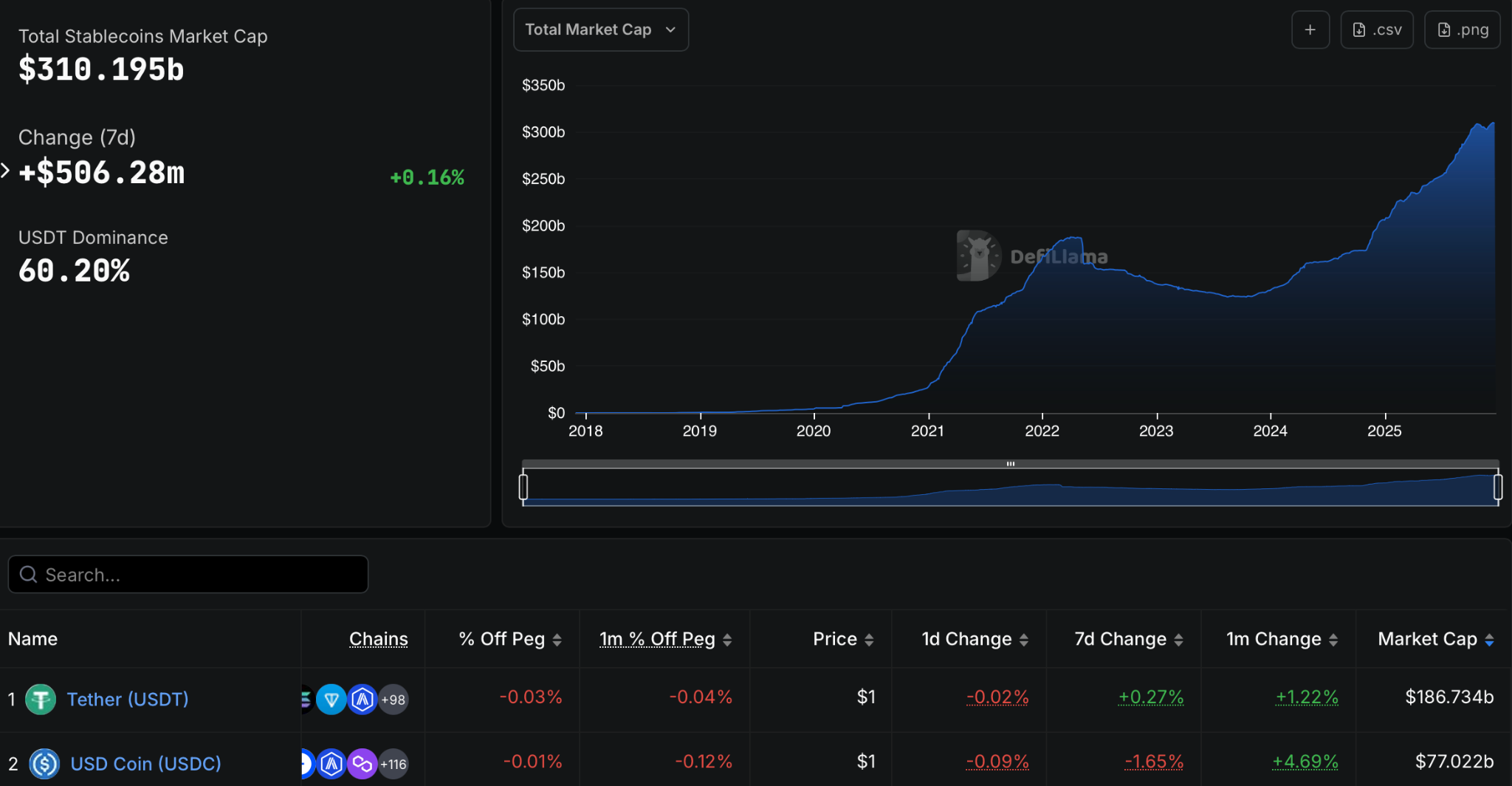
In the United States, the passage of the GENIUS Act in July created a clear federal framework for stablecoin issuance and use. Since then, the stablecoin market has expanded to more than $310 billion in total supply.
US dollar–backed stablecoins continue to dominate the sector, with Tether’s USDT and Circle’s USDC accounting for roughly 85% of total stablecoin supply, according to DefiLlama data.
